Bringing your newborn home for the first time is overwhelming in the best and most terrifying way. One minute you’re staring at this tiny person wondering how something so small can need so much, and the next you’re googling “is it normal for my baby to sneeze a lot” at 3 a.m.
First of all, you did it. Your baby is here and you’re home together. And if you’re feeling a little overwhelmed right now, that’s completely okay. Every new parent does. Here’s what you need to know to get through these beautiful, exhausting, precious first days. 🤍
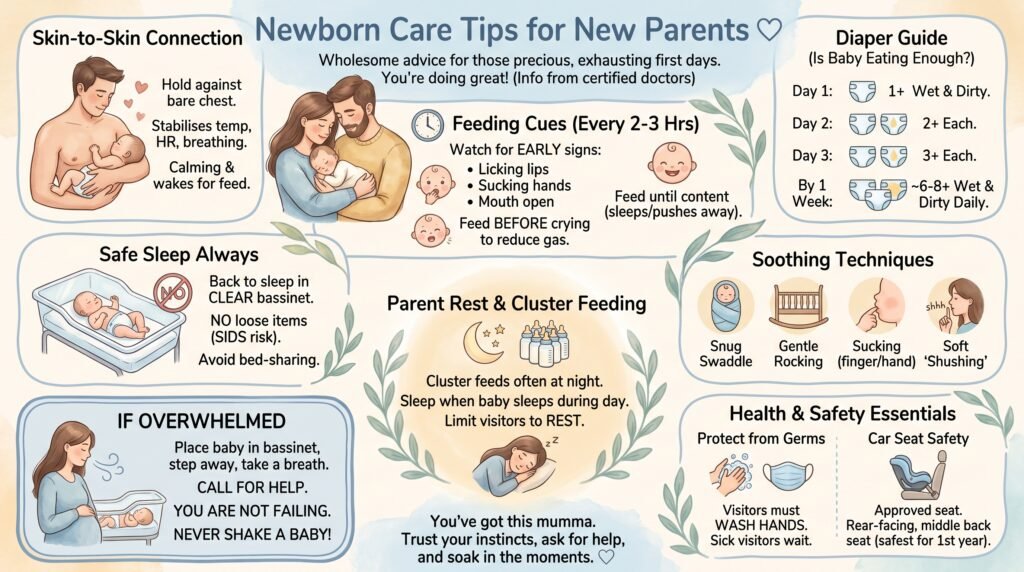
Hold Your Baby Skin to Skin One of the best things you can do in those first hours and days is hold your baby against your bare chest, just a diaper between you. It helps stabilise their temperature, heart rate, blood sugar and breathing. And it’s incredibly calming for them. If your baby is too sleepy to feed, this can gently wake them up too.
Feed Them Before They Cry Newborns have tiny stomachs and need to eat every two to three hours, day and night. Instead of watching the clock, watch your baby. Early hunger cues look like licking their lips, sucking on their hands or opening their mouth wide. Try to catch those signs early because once they start crying they swallow air, which leaves less room for milk and makes them gassy and fussy. Feed until they seem content. It’s usually when they fall asleep or gently push away.
Watch Their Diapers Not sure if your baby is eating enough? Their diapers will tell you. A simple guide for the first few days is matching diapers to their age in days. Day one, at least one wet and one dirty diaper. Day two, at least two of each. Day three, at least three of each. By one week old you should be seeing around six to eight wet and dirty diapers every single day.
Safe Sleep Always Always place your baby on their back to sleep in a bassinet. No loose blankets, pillows or stuffed animals in their sleep space. These increase the risk of Sudden Infant Death Syndrome. And I know you would want to sleep beside your new born but it might increase the risk of suffocation, so clear their surroundings in the bassinet.
One more thing, newborns often cluster feed at night and it is exhausting. Sleep when your baby sleeps during the day. And don’t feel bad about limiting visitors so you can actually rest. You need it.
Soothing Your Baby Crying is your baby’s only way of talking to you right now. Once you’ve checked their diaper and offered a feed, here are some things that genuinely help. Swaddling them snugly in a blanket gives them comfort. Gentle swaying or rocking can settle a fussy baby quickly. Letting them suck on your clean finger or their own hand helps too. And making a soft shushing sound near their ear mimics the sounds of the womb and it is wholesomely effective.
And if your baby won’t stop crying and you feel overwhelmed, gently place them in their bassinet and step away for a moment. Call someone to help. Take a breath. You are not failing. Never shake a baby, ever!
Protect Them from Germs Your baby’s immune system is brand new and fragile. Ask every visitor to wash their hands thoroughly before holding the baby. And if someone has a cold, a cough or a fever just kindly ask them to wait. It’s not rude. It’s protecting your baby.
Car Seat Safety Your baby must always travel in an approved car seat. For the first year, the safest position is rear facing in the middle back seat.
We gathered this information from certified doctors for you. So you can rest assured of everything you’re reading
Here is the source we used:
https://youtu.be/-CWJYxIvoFQ?si=CDdHWS5pH9VE97f3
You’ve got this mumma. Ask for help when you need it, trust your instincts and soak in every tiny moment. 🤍
This article is for general informational purposes and isn’t a substitute for advice from your pediatrician, who knows your baby’s specific situation best.