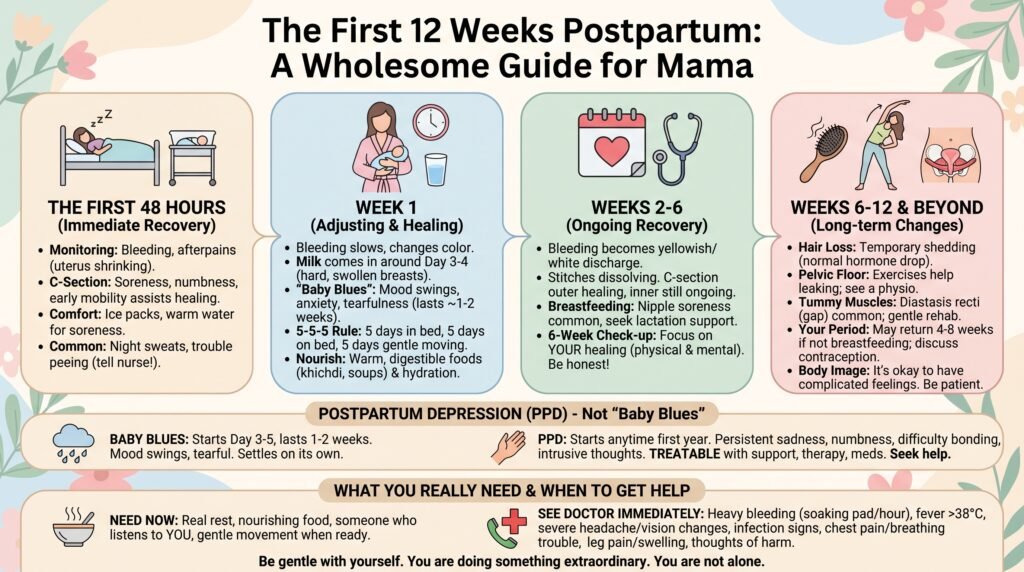
What Really Happens to Your Body in the First 12 Weeks After Birth
You just brought a whole human into this world. And somehow in all the excitement and the photos and the visitors, nobody is really checking on you. Everyone is looking at the baby.
So this one is for you, mumma!
Here’s everything they should have told you, honestly and simply.
You don’t have to read through the whole blog, just scroll to the category to find the needed answers
- What the Postpartum Period Actually Is
- The First 48 Hours
- Week 1
- Weeks 2 to 6
- Weeks 6 to 12 and Beyond
- Postpartum Depression — What You Need to Know
- What Your Body Will Look Like
- What You Actually Need Right Now
- When to See a Doctor Immediately
What the Postpartum Period Actually Is
Most people think recovery is done at 6 weeks. That’s just when your check-up happens. Real recovery can take anywhere from 3 to 12 months depending on how your birth went, whether you had a C-section, whether you’re breastfeeding and how much support you have at home.
Your body goes through three phases…
Right after birth The first 6 to 12 hours are when your body is at the highest risk for complications. This is why you stay in hospital, so medical staff can keep a close eye on you.
Week 1 to week 6 This is where most of the physical recovery happens. The most intense and exhausting stretch of early motherhood.
Week 6 onwards Hormones are still adjusting, your body is still changing and emotionally this can actually be one of the harder periods. You’re not imagining it if it gets harder before it gets easier.
The First 48 Hours
Bleeding Heavy bright red bleeding right after birth is completely normal. Your uterus is shedding its lining. You may pass small clots in the first 24 hours. What’s not normal is soaking through a full pad in under an hour or passing clots bigger than an egg. Call your nurse or doctor straight away if that happens.
Afterpains Your uterus is contracting back to its normal size and it can feel like strong period cramps. Usually worst on days 2 and 3 and stronger during breastfeeding. Ask your doctor about safe pain relief.
Soreness down below If you had a vaginal birth the area will be swollen and sore. An ice pack, a cushion to sit on and warm water when you use the bathroom all help a lot.
C-section recovery Your incision will feel sore and strangely numb at the same time. You’ll have a catheter for the first 24 hours. Getting up and walking feels impossible but it actually helps you heal faster. Don’t lift anything heavier than your baby for several weeks.
Night sweats You might wake up completely drenched. Your body is releasing all the extra fluid from pregnancy. Put a towel under you at night. It passes within a week or two.
Trouble peeing Very common in the first 24 hours especially after an epidural. Tell your nurse. They see this all the time and can help.
Week 1
Physically Bleeding continues but starts to slow and change from bright red to brownish pink. Around day 3 or 4 your milk comes in and your breasts become hard, swollen and very uncomfortable. Night sweats continue. Constipation is common so drink plenty of water and ask your doctor about stool softeners. Piles can appear or worsen from pushing during labour.
Emotionally Around day 3 or 4 many mummas experience what’s called the baby blues. You might cry without knowing why, feel anxious, or feel strangely disconnected from your baby. This is caused by your hormones dropping dramatically after birth combined with exhaustion and the enormity of what just happened.
Baby blues affect up to 80 percent of new mothers and usually settle on their own within 1 to 2 weeks. But if they don’t improve or feel more intense than just a passing low mood please read the postpartum depression section below.
The 5-5-5 rule 5 days in bed. 5 days on the bed resting nearby. 5 days moving gently around the home. It’s not always possible but it’s a good reminder that your body needs rest right now, not productivity.
For Indian mummas The traditional 40 day rest period that many Indian families follow is genuinely wise. The nourishing foods like khichdi, gondh ke laddoo, ajwain water, methi laddoos, dry fruit halwa are not just old traditions. They’re full of iron, calcium and healthy fats that your body genuinely needs right now. If you can rest and be nourished, let yourself be.
Weeks 2 to 6
Bleeding Gradually changes from pink to a yellowish white discharge. Still normal. Still lochia.
Stitches If you had a tear or episiotomy your stitches should be dissolving on their own by now, usually within 2 to 4 weeks.
C-section The outside looks more healed but inside healing is still very much ongoing. No heavy lifting, no driving yet.
Breastfeeding Engorgement usually eases once feeding is established but sore and cracked nipples are very common in these weeks. A lactation consultant is genuinely worth reaching out to if feeding is painful.
Something nobody warns you about Around weeks 6 to 8 some women notice bright red bleeding returning after it had already stopped. This is the inner lining of the uterus finishing its healing. It usually lasts just a few days. If it’s very heavy or comes with pain or fever, call your doctor.
Your 6 week check-up This appointment is for you, not the baby. Your doctor will check your healing, discuss contraception and ask about your mental health. Please be honest about how you’re really feeling. This is not the time to say you’re fine when you’re not.
Weeks 6 to 12 and Beyond
Hair loss Around 2 to 4 months postpartum a lot of women notice significant hair shedding. During pregnancy your hormones kept your hair from falling out and now it’s all coming out at once. It’s alarming but normal and usually settles within a year. Eating well and being gentle with your hair helps.
Pelvic floor weakness Leaking when you sneeze, laugh or cough is very common after birth and doesn’t have to be permanent. Pelvic floor exercises help enormously and a pelvic floor physiotherapist can make a real difference. Ask your doctor about a referral.
Tummy muscles During pregnancy your tummy muscles separate to make room for your baby. Many women notice a gap or softness in their belly that doesn’t go away. Regular sit-ups can actually make this worse. A physiotherapist can check and give you the right exercises.
Your period returning If you’re not breastfeeding your period can return as early as 4 to 8 weeks after birth. If you’re breastfeeding it may stay away much longer. Either way it’s not a reliable form of contraception, speak to your doctor about family planning.
Postpartum Depression. Here’s What You Need to Know
This section matters so please read it.
Postpartum depression is not the baby blues. It is not weakness. It is not a sign that you don’t love your baby. It is a medical condition that affects around 1 in 5 mothers and it is very treatable.
Baby blues vs postpartum depression
Baby blues start around day 3 to 5, feel like mood swings and tearfulness and settle on their own within 1 to 2 weeks.
Postpartum depression can start any time in the first year, feels like persistent sadness, hopelessness or numbness and does not go away on its own without support.
Signs to watch for
Persistent sadness A low mood that doesn’t lift even on good days.
Feeling like a bad mother Excessive guilt and self-criticism that feels overwhelming.
Difficulty bonding Feeling disconnected from your baby or struggling to feel love for them.
Severe anxiety Panic attacks or constant worry that won’t settle.
Withdrawing Pulling away from family, friends and things you used to enjoy.
Intrusive thoughts Unwanted distressing thoughts about harm. Please seek help immediately if this is happening.
Treatment works Counselling, therapy and medication are all effective options. But the most important one would be spending quality time with family and loved ones. Most medications are safe during breastfeeding. Please speak to your doctor, you don’t have to carry this alone.
What Your Body Will Look Like
Your belly Your uterus takes about 6 weeks to return to its normal size. Your tummy will still look pregnant for a while after birth and that is completely normal. Be gentle with yourself when you look in the mirror.
Your skin Hormones can bring on breakouts for some women postpartum. Dark patches from pregnancy may fade gradually. Everyone’s skin journey is different.
Your breasts If you’re breastfeeding your breasts will keep changing throughout. If you’re not, the initial engorgement in the first few days will be uncomfortable. A supportive bra and cold packs help. Don’t express milk to relieve the discomfort if you’re not planning to breastfeed as it signals your body to make more.
Your feelings about your body This one is real and valid. Many women feel grief or shock at how different their body looks and feels after birth. You are allowed to have complicated feelings about your body while also being patient with it. It just did something extraordinary.
What You Actually Need Right Now
Nourishing food Warm, easy, comforting food. Khichdi, dalia, gondh ke laddoo, ajwain water, dry fruit halwa, saag. These are not just traditions, they are genuinely what your body needs right now.
Real rest Not just sleep when the baby sleeps. Actual rest. Say no to visitors. Say yes to every offer of help. Lower your standards for everything except your own recovery.
Someone who asks about you Not just the baby. You. Find your person, partner, mother, friend. Someone who listens without giving advice.
Gentle pelvic floor exercises Start as soon as you feel ready after a vaginal birth. Small gentle squeezes. They make a real difference long term.
When to See a Doctor Immediately
Please don’t wait if you experience any of these…
Heavy bleeding Soaking more than one pad per hour or passing large clots.
High fever Above 38 degrees.
Severe headache or vision changes Especially combined with sudden swelling of your face or hands.
Signs of infection Increasing redness, warmth, pus or a bad smell around your wound or stitches.
Difficulty breathing or chest pain Go to the emergency room.
Leg pain or swelling Especially in one leg. Needs to be checked.
Thoughts of harming yourself or your baby Please call someone or go to your nearest hospital immediately.
One Last Thing
The postpartum period is one of the most intense and vulnerable times a woman can go through. Physical recovery, emotional upheaval, sleeplessness, identity shift, all at the same time.
You are not failing if it’s hard. You are not failing if recovery takes longer than expected. You are not failing if you need help.
The most important thing you can do for your baby right now is take care of yourself.
Eat well. Rest when you can. Ask for help. Accept it when it comes.
You went through something extraordinary mumma. Be gentle with yourself.