What Is PCOS and What Does It Mean for Me?
If you’ve been told you have PCOS or suspect you might, this is for you. No complicated medical terms. Just honest, simple information.
Here’s what we cover…
- What Is PCOS?
- How It Affects Your Body
- How Is It Diagnosed?
- PCOS and Ovulation Tracking
- PCOS and Birth Control
- What You Can Do
Just scroll to what you need answers on.
What Is PCOS?
PCOS stands for Polycystic Ovarian Syndrome.
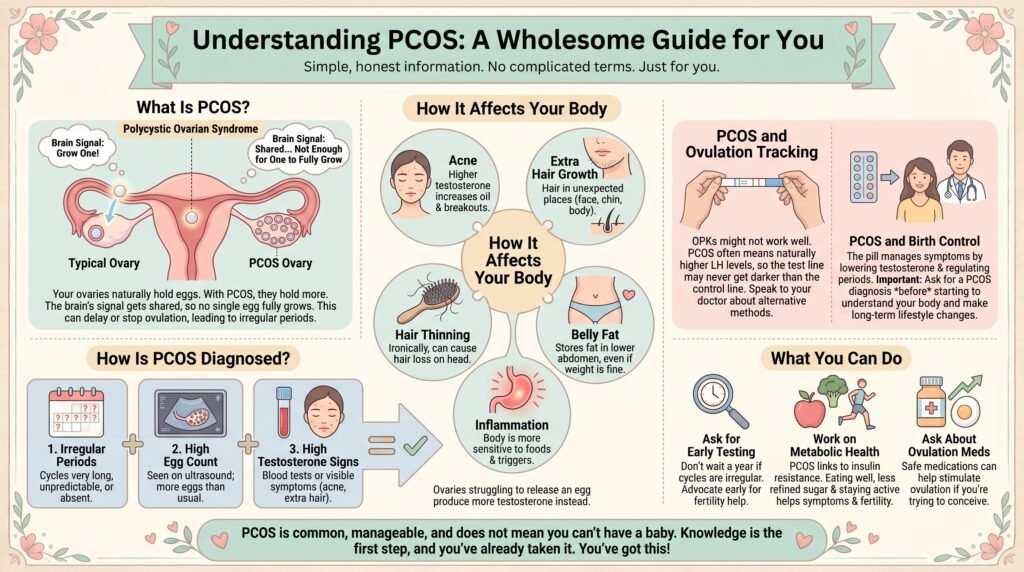
Your ovaries naturally hold eggs. But with PCOS they hold more eggs than usual. Every month your brain sends a signal to help one egg grow and release. But with so many eggs that signal gets shared between all of them, so no single egg gets enough of it to fully grow. This is why ovulation takes much longer or sometimes doesn’t happen at all. And without regular ovulation your periods become unpredictable or stop altogether.
How It Affects Your Body
When your ovaries struggle to release an egg they start producing more testosterone instead. This causes a few things you might notice…
Acne Higher testosterone increases oil production which leads to breakouts.
Extra hair growth You might notice hair growing in unexpected places like face, chin or body.
Hair thinning Ironically higher testosterone can also cause hair loss on your head.
Belly fat PCOS can cause your body to store fat around your lower abdomen even if your overall weight seems fine.
Inflammation PCOS increases inflammation in your body making it more sensitive to certain foods and triggers.
How Is PCOS Diagnosed?
Your doctor will look for at least two of these three things…
Irregular or missing periods Cycles that are very long, unpredictable or absent.
High egg count Seen on an ultrasound. It will show more eggs than usual in the ovaries.
High testosterone signs Either through blood tests or visible symptoms like acne and extra hair growth.
You don’t need all three. Two out of three is enough for a diagnosis.
PCOS and Ovulation Tracking
If you have PCOS and you’re trying to conceive this is really important to know…
Ovulation predictor kits may not work well for you Women with PCOS naturally have higher levels of LH hormone all the time. This means the test line on ovulation strips may never get darker than the control line, making it very hard to detect your actual ovulation. Speak to your doctor about alternative tracking methods.
PCOS and Birth Control
Many doctors prescribe birth control to manage PCOS symptoms because it lowers testosterone and regulates periods. It does help with symptoms.
But here’s something worth knowing… Many women start the pill without being told they have PCOS first. This means they miss the chance to understand what’s happening in their body and make lifestyle changes that could really help long term.
If you’re on birth control and have irregular periods or other PCOS symptoms, it’s worth asking your doctor directly whether PCOS could be the reason.
What You Can Do
Ask for early testing If you have irregular cycles don’t wait. PCOS is a known risk factor for fertility challenges. You don’t have to wait a full year of trying before asking for help. Advocate for yourself early.
Work on your metabolic health PCOS often comes with insulin resistance, meaning your body doesn’t process sugar as efficiently. Eating well, reducing refined sugar and staying active can make a real difference to your symptoms and your fertility.
Ask about ovulation medication If you’re trying to conceive and not ovulating regularly there are safe medications that can help stimulate ovulation. Ask your doctor about this option.
PCOS is common, manageable and does not mean you can’t have a baby. Knowledge is the first step and you’ve already taken it.